お電話ください : +86 -13376077792
メールでお問い合わせ : info@cnbesten.com

Ubc cans paint removing

Ubc cans paint removing

  • How Continuous Decoating Furnaces Revolutionize Aluminum Can Recycling
    How Continuous Decoating Furnaces Revolutionize Aluminum Can Recycling
    Nov 07, 2023
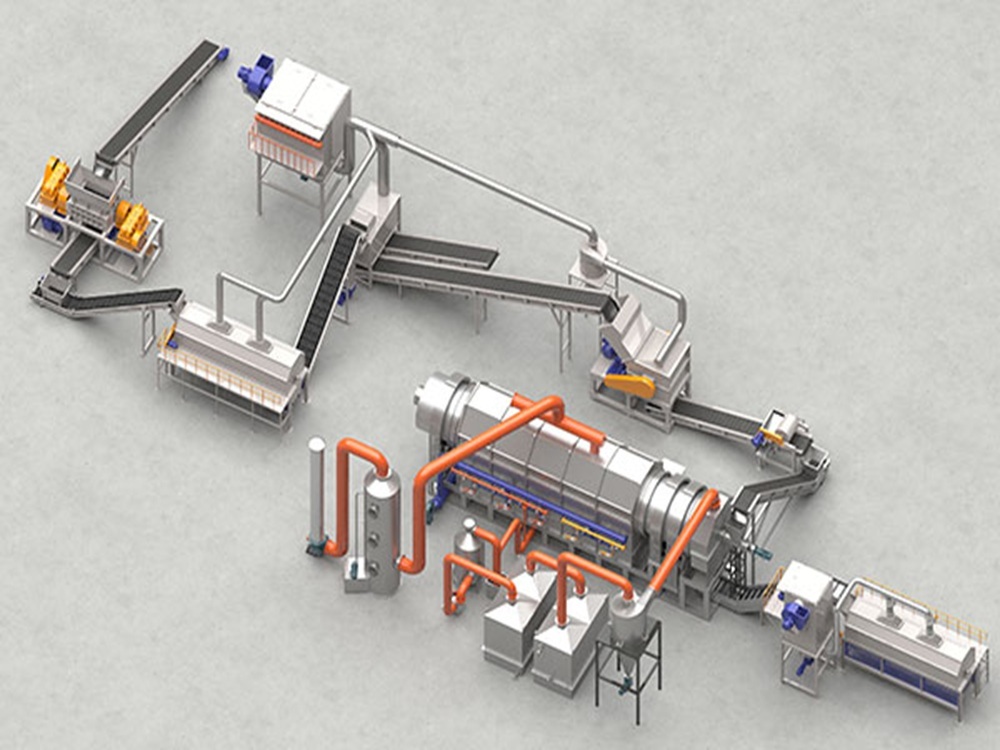
    In an era where resource circulation is gaining paramount importance, efficiently and eco-consciously managing waste aluminum cans is a critical challenge. The continuous automatic carbonization furnace plays a pivotal role in the decarbonization and paint removal process for these cans. Here's a detailed look at how it works and the significant advantages it offers. ​Stage 1: The Crucial Preparation Phase​ The recycling journey begins with preparation. Whole used cans are fed into a powerful industrial shredder. Here, robust mechanical forces break them down into smaller, uniform fragments. The ideal fragment size is carefully controlled between 3 to 5 centimeters. This specific size is not arbitrary. It maximizes the surface area of the aluminum fragments, ensuring they will be exposed evenly to heat inside the carbonization furnace. This uniform heating is the fundamental prerequisite for efficient and complete paint removal later in the process. ​Stage 2: The Core Paint Removal Process​ ​1. Automated and Orderly Feeding​ Prepared can fragments are then transported via an automated conveyor system into the preheated continuous carbonization furnace. This feeding process is continuous and orderly. A specially designed sealing mechanism at the feed inlet is critical. It maintains an oxygen-deficient or oxygen-free environment inside the furnace, which is essential for the process. Advanced monitoring systems track the feed rate and volume in real-time, ensuring a smooth, consistent flow and preventing jams or operational hiccups. ​2. High-Temperature Carbonization & Paint Stripping​ Once inside the furnace, the fragments are subjected to carefully controlled high temperatures, typically maintained within a specific range tailored to the material and paint type. Under this intense heat in a low-oxygen setting, the paint coating on the cans undergoes a transformation. The organic components in the paint thermally decompose and carbonize, causing the layer to separate from the underlying aluminum. Simultaneously, an internal mechanical system gently rotates, moving the fragments steadily from the feeding end toward the discharge end. This constant motion ensures every fragment is uniformly treated, resulting in complete paint removal and leaving behind clean, bare aluminum. ​3. Environmental & Safety Control​ Maintaining a low-oxygen atmosphere is paramount. Excessive oxygen would cause the aluminum to oxidize, degrading its quality and potentially leading to safety hazards like fires or smoke. The furnace's advanced design and precise gas control systems expertly maintain this ideal environment, guaranteeing a safe, efficient, and continuous operation. ​Stage 3: Environmental & Economic Benefits​ ​1. Clean Gas Emission​ The carbonization process does generate gases from the decomposed paint and other impurities. However, these gases are not simply released. They are immediately captured by a dedicated gas treatment system. This system employs multi-stage purification processes—such as activated carbon adsorption and catalytic purification—to remove harmful substances. The treated gas is cleaned to meet national environmental standards before being safely released, minimizing the impact on the surrounding environment. ​2. True Resource Recovery​ After successful paint removal, the resulting clean aluminum is a valuable secondary raw material. This aluminum can be melted down and recast into new products like aluminum ingots, sheets, or specific components. It finds new life in manufacturing various goods, from window frames to automotive parts. This process significantly reduces the need for virgin aluminum ore mining, which is an energy-intensive operation. By lowering energy consumption and production costs, it offers clear economic advantages. Furthermore, it effectively tackles the environmental problem of can litter, making a substantial contribution to the development of a circular economy. ​Conclusion​ In summary, the continuous automatic carbonization furnace demonstrates a scientific, highly efficient, and environmentally sound approach to aluminum can recycling. Its seamlessly integrated stages—from preparation to purification—give waste cans a new lease on life. This technology holds significant importance for resource conservation and environmental protection, turning a common waste product into a source of valuable material and supporting greener industrial practices.
    続きを読む
ニュースレター

最新情報を受け取るにはサインアップしてください

伝言を残す

伝言を残す
弊社の製品にご興味があり、詳細を知りたい場合は、こちらにメッセージを残してください。できるだけ早く返信いたします。
提出する

製品

whatsApp

接触